
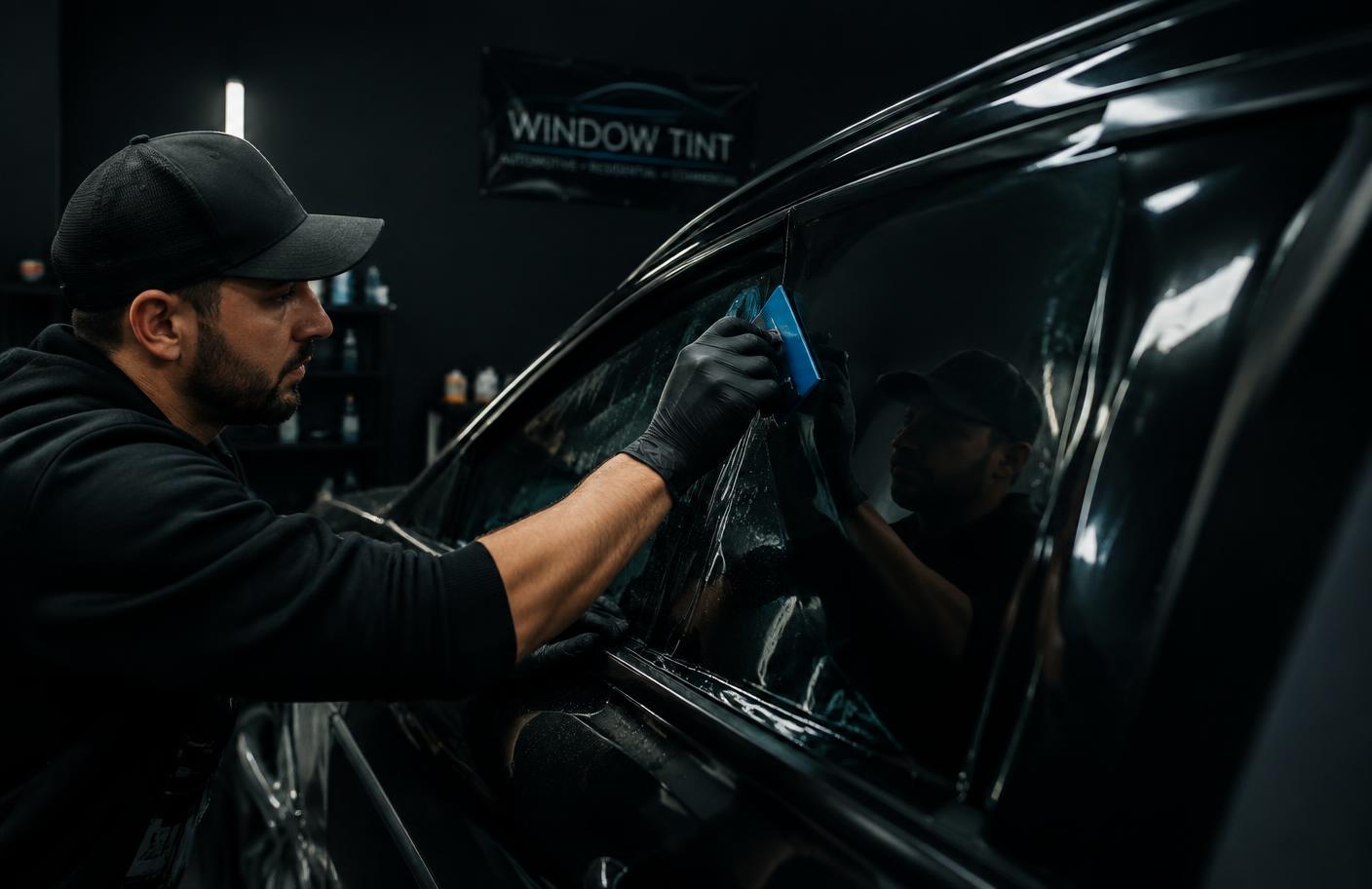
Before you pick a shade, it helps to understand what film actually does, what Utah allows, and which film types are worth the difference in price.
Tint is a comfort and health upgrade
Quality automotive film rejects a large share of the infrared energy that heats your cabin, which means the interior is cooler after a day parked outside and the air conditioning has less work to do.
Good film also blocks the overwhelming majority of UV radiation. At Salt Lake's elevation, UV exposure is stronger than it is at sea level, and it is what fades dashboards, cracks leather, and reaches the arm you rest against the window.
Film types explained plainly
Dyed film is the least expensive and mostly cosmetic. Carbon film holds its color and rejects meaningfully more heat. Ceramic film is the top tier — highest heat rejection, no interference with phone, GPS, or radio signals, and excellent clarity.
Shade percentage and heat rejection are different things. A dark dyed film can let more heat through than a lighter ceramic film, so pick the technology first and the shade second.
Know the Utah rules
Utah sets limits on how dark front side windows can be and on windshield film. Rear windows are treated differently from fronts. We will walk you through what is permitted for your vehicle before we cut anything.
Medical exemptions exist for some drivers. If that applies to you, bring the documentation and we will advise accordingly.
Curing and aftercare
Film is installed wet, and a small amount of moisture stays between the film and the glass for a few days. Leave the windows up during the cure window your installer gives you — rolling them down early can shift the film.
A slight haze or tiny water pockets in the first days are normal and clear as the film dries. Clean with an ammonia-free glass cleaner and a soft microfiber afterward.
Ask the JNG team
Every vehicle arrives in a different condition, so the right answer depends on your paint, your mileage, and how you use the car. Call JNG Auto Reconditioning at (801) 520-1103 and we will tell you honestly what we would do with it.