
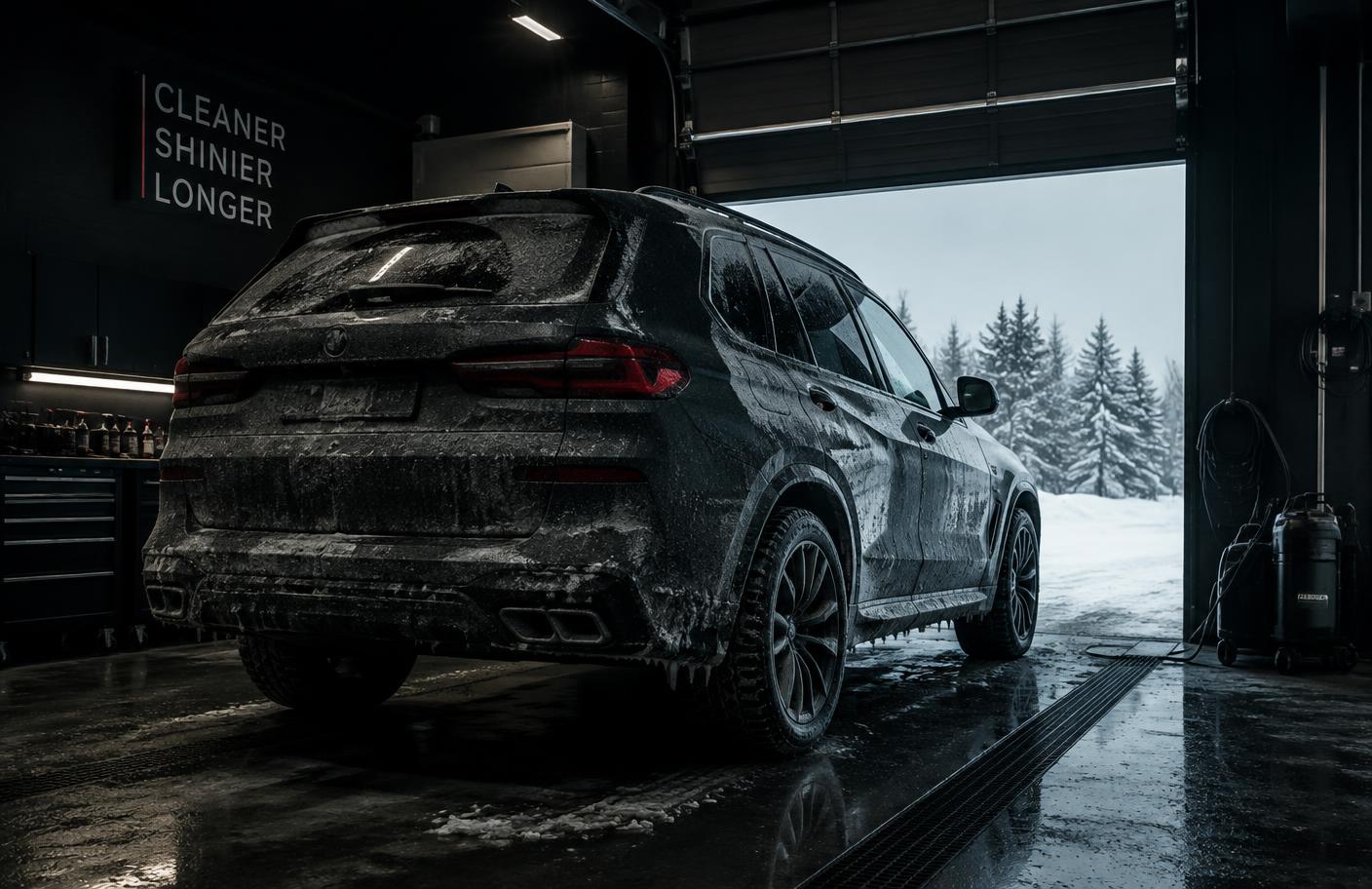
Cold weather does not rule out coating your car — it rules out coating it in an uncontrolled space. Inside a climate-controlled shop, February works as well as June.
What Utah winter does to a vehicle
Magnesium chloride brine, the liquid deicer used across the Wasatch Front, clings to surfaces and stays chemically active long after the roads dry. It pulls moisture out of the air and keeps working on metal, fasteners, and brake components.
Add freeze-thaw cycles, canyon gravel, and long parked hours in the cold, and paint, glass, rubber, and interiors all take damage at once.
Protect the paint before the first storm
A ceramic coating or fresh sealant gives brine less to grip and makes mid-winter washes fast enough that you will actually do them. Paint protection film on the front end handles the gravel that gets spread after every snowfall.
Do this in the fall. Coatings cure best in controlled conditions, and you want the protection on before the salt trucks start running.
Do not skip the underside and the glass
Undercarriage rinses through the winter, and a dry ice clean at the end of it, prevent salt from quietly eating the parts you never look at.
Treat the windshield with a hydrophobic glass coating, replace tired wiper blades, top up winter-rated washer fluid, and check that your defroster and heated seats work before you need them.
Interior and convenience
Rubber all-weather mats catch salt and melt water before it reaches carpet. A protectant on leather and vinyl keeps dry, heated cabin air from cracking them.
A remote start is the piece owners appreciate most — clear glass and a warm cabin before you step outside, every single morning.
Ask the JNG team
Every vehicle arrives in a different condition, so the right answer depends on your paint, your mileage, and how you use the car. Call JNG Auto Reconditioning at (801) 520-1103 and we will tell you honestly what we would do with it.