
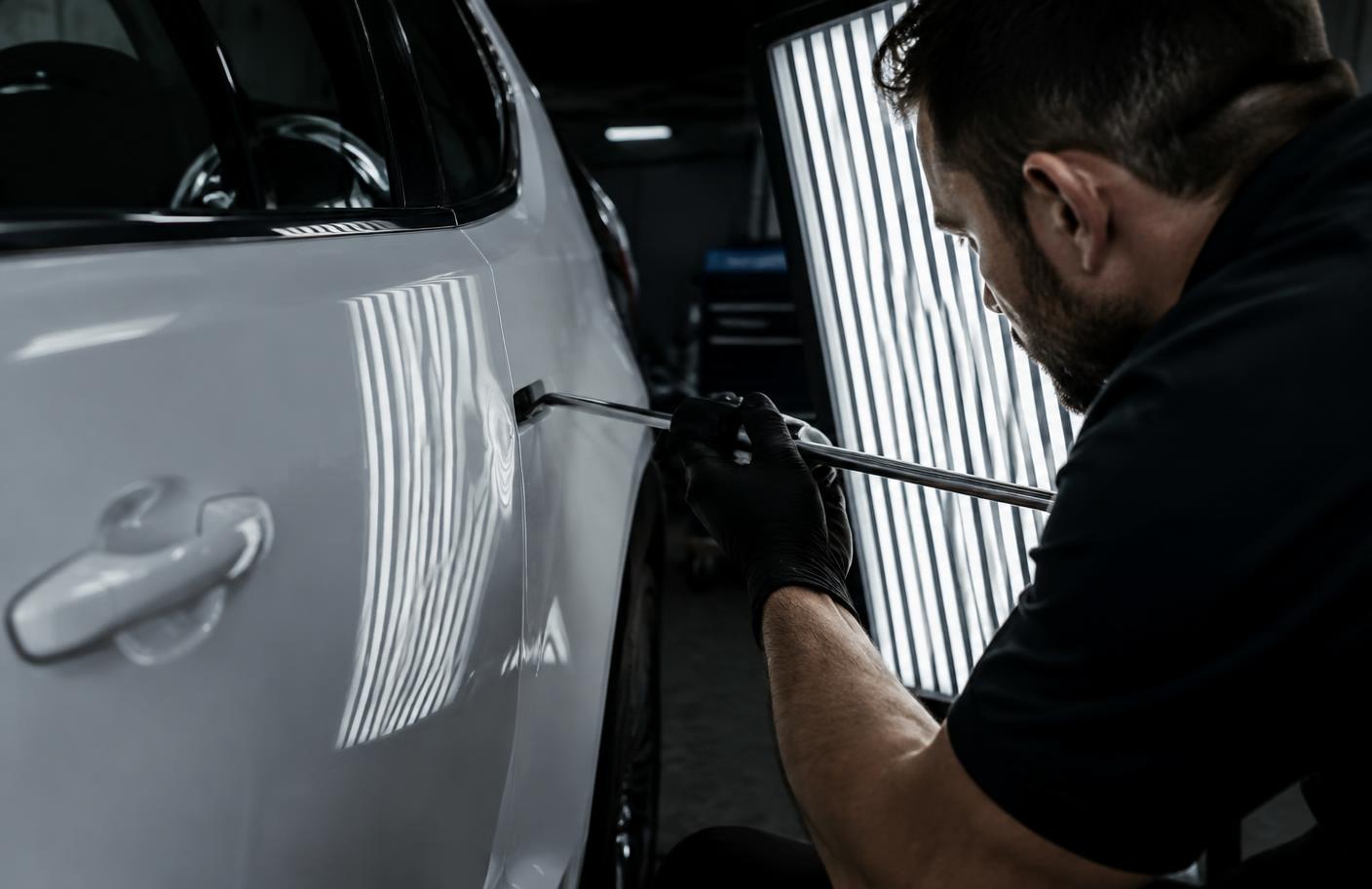
Paintless dent repair is judged entirely on whether you can find the repair afterward. That standard is the whole job.
How paintless dent repair works
Paintless dent repair reaches behind the panel with specialized rods and slowly massages the metal back to its original shape. Nothing is filled, sanded, or repainted — your factory finish stays exactly as it left the plant.
Technicians read the damage through a striped light board reflected on the paint. The reflection reveals high and low spots the eye cannot see, which is how a repair ends up invisible instead of merely improved.
What qualifies
Door dings, hail damage, shopping-cart hits, creases, and many body-line dents are good candidates as long as the paint is not cracked and the panel is reachable from behind.
Sharp damage with broken paint, heavily stretched metal, or dents on structural edges may need conventional body work. We tell you honestly which one you are looking at.
Why it is usually the better option
Original factory paint is worth real money at resale, and no refinish perfectly matches it forever. Paintless repair preserves it, costs less than a body-shop panel repaint, and often takes hours rather than days.
There is also no paint to cure, so the car can be washed and driven immediately.
After an accident or a hailstorm
Photograph the damage in good light before anything else. If you are filing a claim, paintless repair is widely accepted by insurers and generally keeps the claim value lower.
Bring the car in for an assessment before you commit to a body shop — plenty of damage that looks severe turns out to be a straightforward paintless repair.
Ask the JNG team
Every vehicle arrives in a different condition, so the right answer depends on your paint, your mileage, and how you use the car. Call JNG Auto Reconditioning at (801) 520-1103 and we will tell you honestly what we would do with it.