
Washing the outside of a car after a salty winter is the easy half. The underside, where the salt actually does its damage, needs a different approach.
A cleaning method with nothing left behind
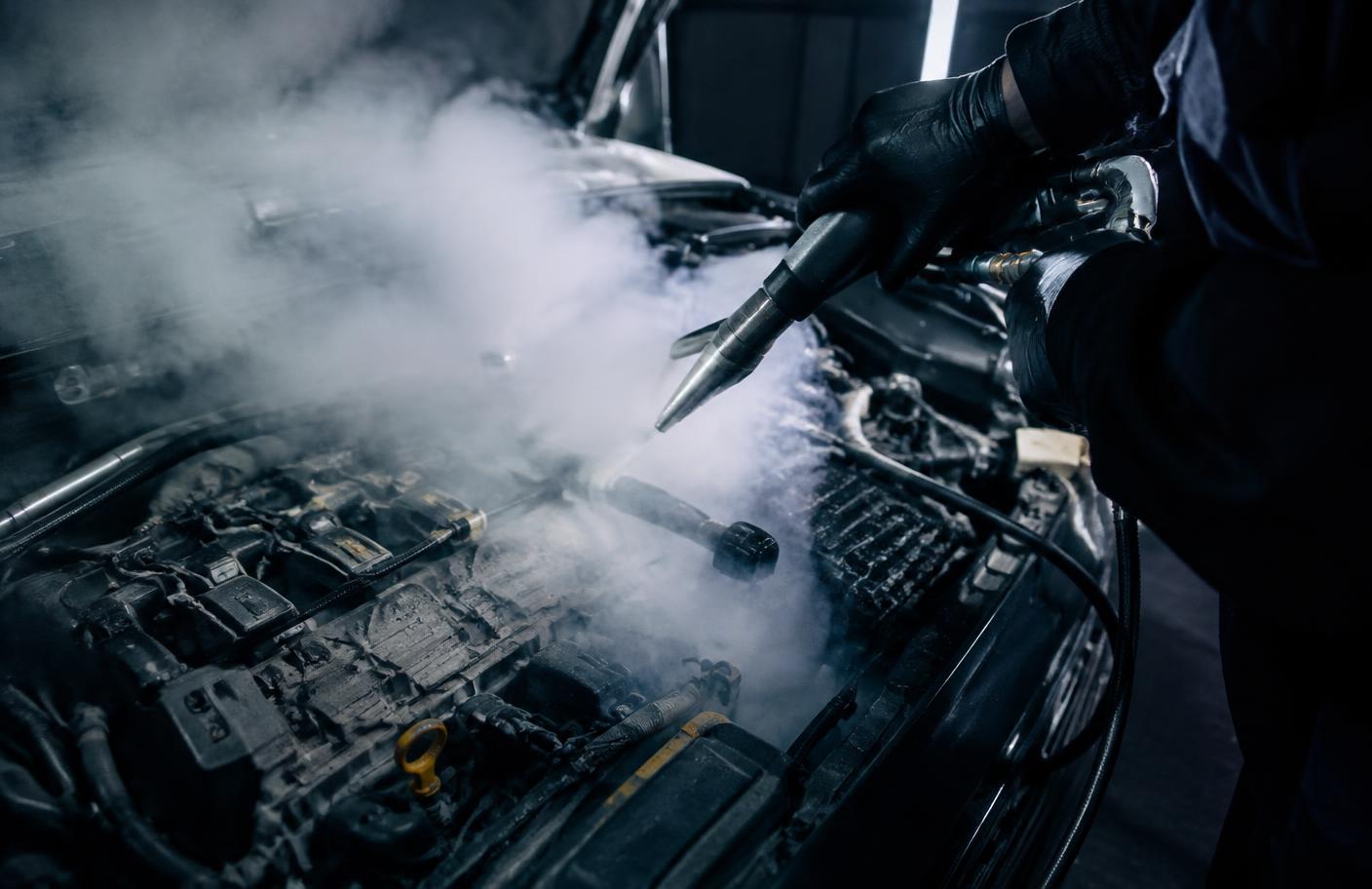
Dry ice cleaning fires pellets of solid carbon dioxide at a surface. On impact they freeze and shrink the contaminant, break its bond with the substrate, and then sublimate — turning directly into gas.
Nothing pools, nothing drips, and there is no leftover blasting media to dig out of seams. All that remains is the dirt you just removed.
Where it outperforms washing
Engine bays, undercarriages, suspension components, wiring looms, transmission tunnels, and restoration shells are exactly the places where water is a liability. Dry ice cleans them without soaking electrical connectors or trapping moisture in cavities.
It is also excellent on baked-on grease, undercoating overspray, and the layered road grime that accumulates under a Utah winter driver.
It is non-abrasive
The pellets are softer than the substrate, so the process lifts contamination without cutting into metal, paint, or plastic the way sand or soda blasting would.
That makes it a favorite for classic car restorations where original finishes and stampings need to survive the cleaning.
The winter case
Road salt that reaches an undercarriage keeps corroding long after the storm. A dry ice clean at the end of the season removes that salt film from the areas a car wash never reaches, and gives you clean metal to inspect for early rust.
It pairs well with a protective undercoating for owners who put real winter miles on their vehicles.
Ask the JNG team
Every vehicle arrives in a different condition, so the right answer depends on your paint, your mileage, and how you use the car. Call JNG Auto Reconditioning at (801) 520-1103 and we will tell you honestly what we would do with it.