
Coatings resist chemicals. Film resists impacts. If rock chips are your concern, only one of those two actually solves the problem.
Film absorbs what paint cannot
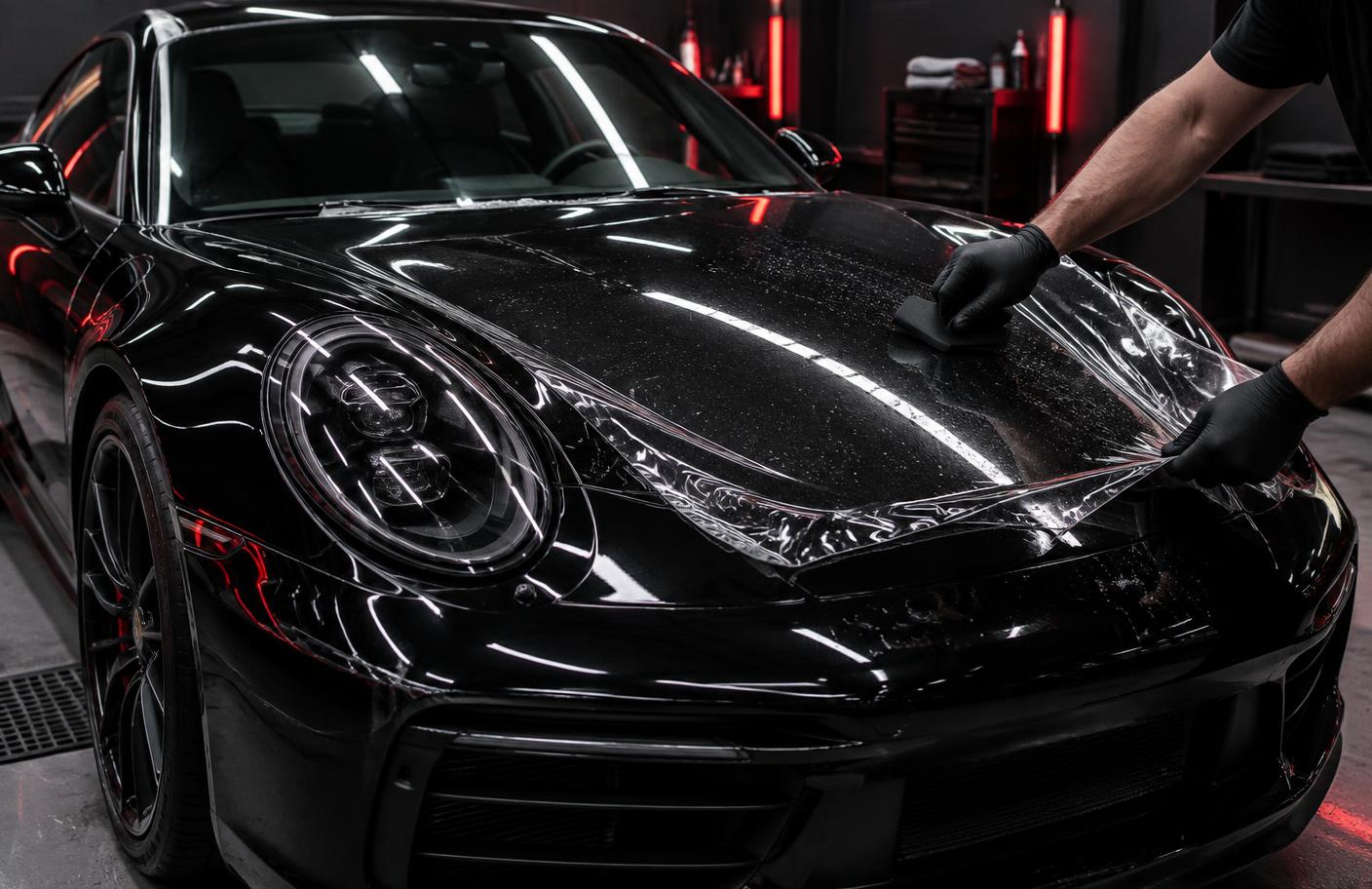
Paint protection film is a thick, clear urethane layer applied over your finish. When gravel comes off a truck tire on I-15 at seventy miles per hour, the film takes the strike and the paint underneath stays untouched.
Modern film also self-heals: light swirls and wash marks disappear as the topcoat relaxes with heat from the sun or warm water. That keeps the surface looking new without polishing.
Choosing your coverage
A partial front — bumper, partial hood, fenders, mirrors — covers the highest-impact areas for the least cost. A full front extends the hood and fenders to their full length so there is no visible film line across the paint.
Full-vehicle coverage makes sense on collector cars, soft or exotic paint, and anything you plan to keep for a long time. Rocker panels, rear arches, and door cups are worth adding on any vehicle that sees canyon roads or gravel.
Installation quality is what you pay for
Film is cut to the panel, aligned wet, squeegeed out, and where the panel allows, wrapped around the edge so no film line is visible. Edges left exposed on a poor install are where lifting and dirt lines start.
We work in a controlled space because dust trapped under film cannot be removed later. The car is inspected under strong lighting before it goes back to you.
Film and coating together
Film and ceramic coating are not competing choices. Film handles physical impact; a coating applied over the film adds slickness, gloss, and stain resistance, and makes the film easier to clean.
Owners who want the finish left alone for years usually run both on the front end and a coating everywhere else.
Ask the JNG team
Every vehicle arrives in a different condition, so the right answer depends on your paint, your mileage, and how you use the car. Call JNG Auto Reconditioning at (801) 520-1103 and we will tell you honestly what we would do with it.