
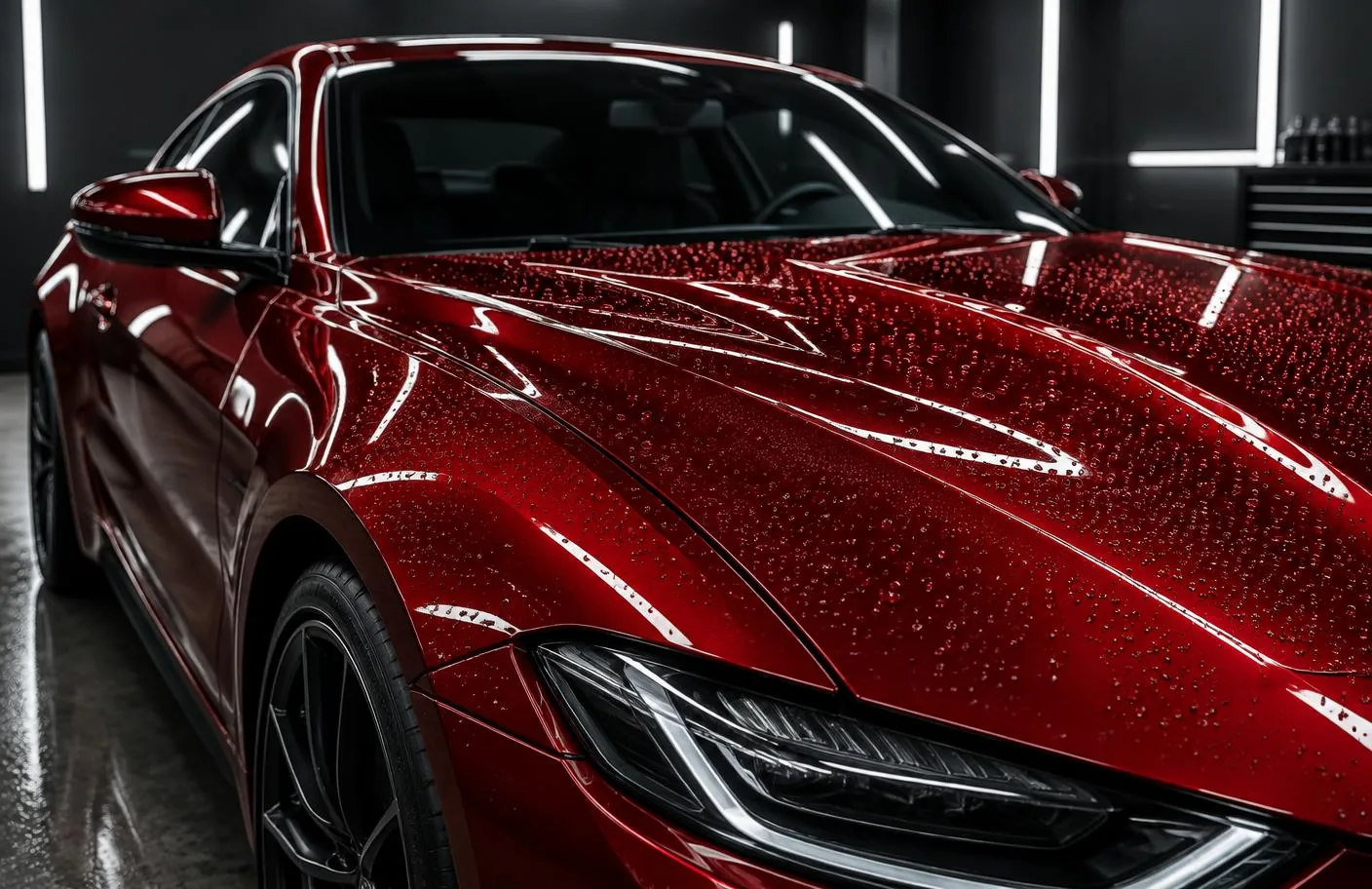
Yes, in most cases a good shop can match bumper paint so the repair is hard to spot, but the match depends on the color, the age of the paint and how the new paint is blended. Reading the factory paint code is only the starting point.
TL;DR
- Bumper paint repair can look seamless when the shop measures your car's current color, sprays a test card and blends the new paint into the neighboring panels.
- A factory paint code alone is not enough, because paint fades and many colors have several variants.
- Metallic, pearl and tri-coat colors are the hardest to match, and plastic bumpers can age differently from metal fenders.
- JNG Auto Reconditioning quotes from photos, so send photos of the bumper for a free quote or call (385) 346-8803.
Can bumper paint be matched after repair?
Usually, yes. Shops that explain their process publicly describe the same approach: find the paint code, read the color of the car as it looks today, mix and adjust the formula, spray a test card, then paint and blend. When those steps are done well, most drivers cannot see where the repair ends.
The honest caveat is that "perfect" depends on the car. A plain solid color is forgiving. A metallic or pearl color is less so, and a tri-coat finish is the least forgiving of all. If you are weighing options for bumper repair in Salt Lake City, ask how the shop handles color before you commit.
Why does the factory paint code not guarantee a match?
The code tells the shop what color left the factory. It does not tell the shop what your car looks like after years of sun, winter road film and washing. Two things get in the way:
- Fading and weathering. Sunlight and age shift paint slightly, so a fresh batch of the original formula can look a touch different from the panel next to it.
- Color variants. Many factory colors come in several variants, small shifts between production plants or model years, so the painter has to pick the right one.
That is why shops describe using a spectrophotometer (a handheld color-reading scanner) on undamaged paint beside the repair, then adjusting the formula to what it reads.
How do body shops match bumper paint step by step?
The sequence below is how professional guides describe it. Skipping a step raises the chance of a visible mismatch.
| Step | What happens | Why it matters |
|---|---|---|
| 1. Find the paint code | Read the label or plate on the vehicle | Gives the factory starting formula |
| 2. Scan the current color | A spectrophotometer reads nearby undamaged paint | Accounts for fading |
| 3. Adjust the formula | The paint system tunes the mix to the reading | Picks the right variant |
| 4. Spray a test card | The mix is sprayed and compared to the car in different light | Confirms the match before the car is painted |
| 5. Paint and blend | New color is faded out into adjacent panels | Removes a hard color edge |
| 6. Clear coat | Clear is applied over the blended area | Gives matching gloss and protection |
What is blending, and why does it touch the fender?
Blending means painting the repaired area and then fading the color gradually into the neighboring panel, so there is no sharp line where new paint meets old. Clear coat is then applied over the whole blended area.
This is why a shop may talk about the fenders even when only the bumper is damaged. If new paint stops exactly at the panel line, a tiny difference in shade is easy to see because the two panels sit side by side. Blending hides that difference by letting the eye move across a gradient instead of an edge. Experienced painters often say the goal is a blendable match, not a perfect panel-by-panel match.
Which bumper colors are hardest to match?
| Finish | What creates the look | Match difficulty |
|---|---|---|
| Solid | Pigment only | Lower |
| Metallic | Aluminum flakes | Moderate to high |
| Pearl | Mica particles, sometimes with flakes | High |
| Tri-coat | Base coat, mid-coat and clear coat | Highest |
Metallic and pearl colors change with the viewing angle, so a painter judges them face-on and from the side. A tri-coat adds a see-through mid-coat, and the final color changes with how many mid-coats are applied. Painters usually make test panels for each layer rather than guessing.
Why can a plastic bumper look different from a metal fender?
Bumper covers are plastic, while most other panels are metal. The two materials are primed and painted differently and can age differently, so a bumper can read slightly off beside a fender even when both used the same formula. Painters check the match across that joint and blend where needed. It is one more reason a color check in more than one light matters.
Can scuffs and scratches be fixed without a full repaint?
Sometimes. A shallow mark may polish out with no new paint at all. A deeper scratch usually needs refinish work and a blend. If you are not sure which you have, photos usually tell the story. This article is about the paint, not the structure underneath.
What should you ask a shop before they paint your bumper?
- Will you scan my current paint color, or only mix from the factory code?
- Will you spray a test card and compare it to my car in more than one light?
- Will the new paint be blended into the fender, and is that in the estimate?
- Is my color a metallic, pearl or tri-coat, and does that change the process?
- How long does the car need to stay out of the weather afterward?
If the answers are vague, treat that as a warning sign. A confident shop can walk you through each step.
What if the bumper also has structural damage?
Repair first, paint second. A cracked bumper, broken tabs or a misaligned cover should be sorted out before color goes on, so the finish is applied to the final surface. If the impact was bigger than a bumper scuff, see our collision repair in Salt Lake City page.
JNG Auto Reconditioning was voted Best of SLC 2026 for Ceramic Coating and handles bumper paint repair for Salt Lake City drivers. Every vehicle is inspected before work begins, and quotes start from photos.
FAQ
Can bumper paint really be matched after repair?
Usually, yes. A shop that reads your current paint color, sprays a test card and blends into the neighboring panel can make the repair hard to see. Results vary by color and paint condition.
Is the paint code enough to match my bumper?
No. The code gives the factory formula, but paint fades and many colors have variants, so a good shop adjusts the mix to the car's current color.
Why do shops blend paint into the fender?
Blending fades new paint into the next panel so there is no hard edge. Without it, a small shade difference shows where two panels meet.
Are metallic and pearl colors harder to match?
Yes. They change with viewing angle, so they take more care, and tri-coat finishes are the hardest because the mid-coat count changes the color.
Why does my bumper look different from my fender after painting?
Plastic bumpers and metal panels are primed and painted differently and can age differently. A good painter checks the match across that joint and blends where needed.
Can I get a bumper paint repair quote from photos?
Yes. JNG quotes from photos, then inspects the vehicle before work starts.
One last thing: ask how the color will be matched
A good bumper paint repair is a process, not just a can of paint. For bumper paint repair in Salt Lake City, request a free photo quote, or call JNG Auto Reconditioning at (385) 346-8803.
Sources: Northeast Collision, "Car Paint Color Matching: How Shops Match Paint in 6 Steps" (northeastcollision.net); VIVE Collision, "Auto Body Paint Matching & Blending Explained" (vivecollision.com); AutofxMart, "Stop Repainting Twice: The Spray-Out Card Rule" and "How to Blend Car Paint" (autofxmart.com); reviewed November 2026. General guidance; results vary by color, paint condition and process.