
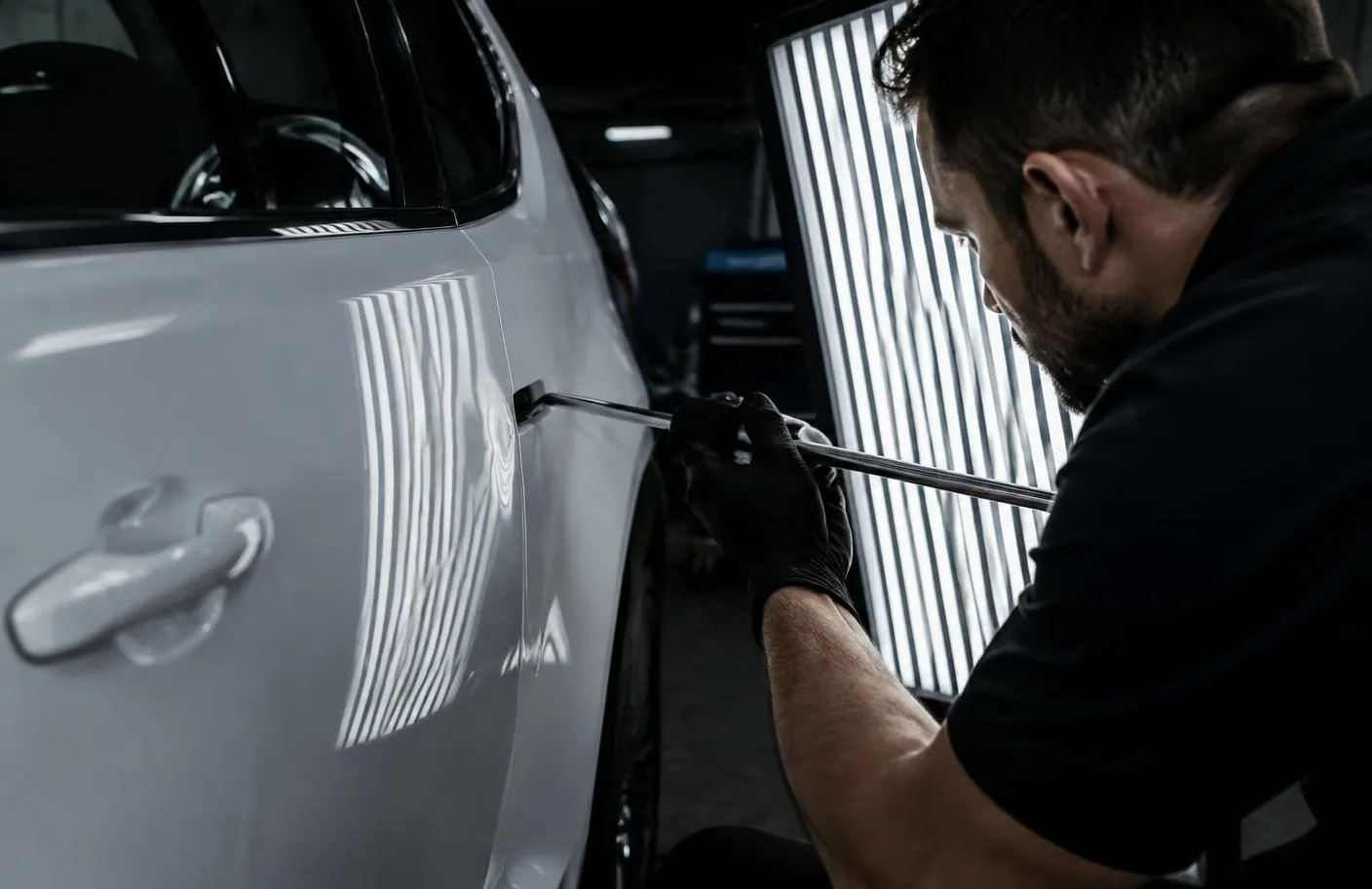
Hail damage in Salt Lake City is usually repaired with PDR (dent repair that keeps the factory paint), and published local hail repair prices range from about $500 to $7,000 depending on how many panels and dents are involved. If you carry comprehensive coverage, your auto insurance typically pays for hail repair after your deductible.
TL;DR
- A published Salt Lake area range puts hail repair at about $500 to $7,000, depending on panels, dent count, dent size and vehicle.
- Hail is a comprehensive claim, not a collision claim, so your comprehensive deductible applies.
- PDR keeps the original paint on most hail dents; cracked paint or stretched metal may need traditional bodywork.
- JNG Auto Reconditioning reviews hail damage from photos first, so send photos for a free quote or call (385) 346-8803.
How much does hail damage dent repair cost in Salt Lake City?
Hail repair is priced by the panel, not by the car. A technician counts the dents on each panel, sorts them by size and notes anything that makes them harder to reach, such as roof rails, braces or aluminum panels. The total for every panel becomes the estimate.
Salt Lake Dent Repair publishes a hail repair range of $500 to $7,000 "depending on how many panels, dents, and type of car." The same page notes that many hail repairs come in under $1,000, while others run over $5,000. That is a typical local industry range, not JNG's price. JNG Auto Reconditioning prices hail damage from your photos and an inspection through its dent repair service.
| Hail damage level | What it usually looks like | What drives the price |
|---|---|---|
| Light | A few small dents on one or two panels | Dent count, panel access |
| Moderate | Dozens of small to medium dents across the hood, roof and trunk | Number of panels, dent size, braces and rails |
| Heavy | Many deep dents on most top panels, sometimes side panels | Dent depth, stretched metal, aluminum panels |
| Severe | Cracked paint, broken glass or trim, panels beyond PDR | Parts, paint, and possible panel replacement |
JNG does not publish a hail price list. Every hail repair is quoted from photos of your vehicle, so send pictures of each damaged panel for a real number.
The number of dents matters, but so does where they are. Ten dents on an open hood can cost less than five dents under a roof brace.
What is PDR and why is it used for hail?
PDR is a dent repair method that reshapes the metal from behind the panel, or pulls it from the outside with glue tabs, without sanding, filling or repainting. Because hail dents are usually round and shallow and the paint is often intact, they are well suited to PDR.
Keeping the factory paint matters. Factory paint is applied and cured in ways a body shop cannot fully duplicate, and an original finish avoids the color matching and blending that traditional bodywork requires.
Round, shallow dents: usually good PDR candidates
Most hail leaves smooth, round dents. When the paint is not cracked and the metal is not stretched, PDR is normally the first option to assess.
Sharp or deep dents: check for stretched metal
Large hailstones can stretch the metal. Stretched metal is harder to return to its original shape and may leave a slight high or low spot. These dents take longer and cost more.
Cracked paint or damaged panels: check whether bodywork is needed
If hail chipped or cracked the paint, PDR alone cannot fix the finish. Those areas may need traditional repair and refinishing, which raises cost and repair time.
Will insurance pay for hail damage in Utah?
Hail damage is covered under comprehensive coverage, sometimes called "other than collision." Liability-only policies do not cover hail damage to your own car. If you have comprehensive, your insurer pays the approved repair cost minus your comprehensive deductible.
A few points to know:
- Your deductible applies per claim. The insurer pays the approved estimate minus your comprehensive deductible.
- Ask about your premium. Ask your insurer how a comprehensive claim may affect your rate.
- Small hail damage may not be worth claiming. If the estimate is close to your deductible, paying out of pocket can make more sense.
- Ask about choosing your repair shop. Ask your insurer how shop selection works under your policy. For claims against another driver's insurer, the Utah Insurance Department says you are not required to use the shop it suggests, though you may owe the difference if your shop charges more.
What are the steps to file a hail damage claim?
- Photograph the damage soon after the storm. Take wide shots of the whole car and close-ups of each panel in angled light.
- Check your policy. Confirm you have comprehensive coverage and note the deductible.
- Report the claim. Call your insurer or use its app, and give the date and location of the storm.
- Get an estimate. The insurer may send an adjuster, use a drive-in center or ask for photos. You can also get your own estimate from the shop you choose.
- Choose your shop. Tell your insurer which shop you want to use.
- Review supplements. Hail damage is easy to undercount. If the shop finds more dents during repair, it can submit a supplement to the insurer.
- Pay your deductible at pickup. The insurer pays the rest according to the approved estimate.
How long does hail damage repair take?
It depends on the number of dents and panels. Light hail on a few panels may take a short time, while a car with heavy damage across the roof, hood and trunk can take considerably longer. Parts, paintwork or insurer approvals can add time. JNG Auto Reconditioning can give you an expected timeline with your photo quote.
After a large storm along the Wasatch Front, demand rises quickly. Getting photos in early helps you get a place in line.
How can you tell if your car has hail damage?
Hail dents are easy to miss on a clean, sunny day. They show up best in reflected light. Look along the hood, roof and trunk lid at a low angle, ideally toward a straight edge such as a building line or fluorescent light. Small round dimples that bend the reflection are hail dents.
Check these areas after a Salt Lake Valley storm:
- Roof. It takes the most direct hits and is the hardest to see, so use a step stool or photos taken from above.
- Hood and trunk lid. These flat panels often carry the most dents.
- Top edges of doors and fenders. Wind-driven hail can hit the sides of the car.
- Trim, mirrors and lights. Look for cracked lenses, chipped mirror caps and dented moldings.
- Glass. Check the windshield and sunroof for chips or cracks, which are handled separately from dent repair.
If you are not sure, take photos and send them in. A technician can usually tell from good photos whether the marks are hail dents, and roughly how widespread they are.
Does hail damage affect a car's value?
Unrepaired hail damage usually lowers what a buyer or dealer will pay, and it can show up on a vehicle history report if a claim was paid and the repair was never done. If you plan to sell or trade in, get the damage assessed first so you can compare the repair cost with the value difference. If the car is leased, check your lease return terms, since visible dents are often charged at turn-in.
Why does hail repair cost vary between vehicles?
- Panel material. Aluminum hoods and roofs are harder to work than steel.
- Access. Roof rails, sunroofs, braces and double-layer panels limit tool access.
- Dent size and count. More and larger dents mean more labor.
- Paint damage. Cracked paint moves part of the job from PDR to bodywork.
- Trim and glass. Removing headliners, trim or replacing glass adds time and parts.
JNG Auto Reconditioning is a hail damage repair option for Salt Lake County drivers who want the original paint kept where possible and a clear, photo-based estimate. The shop has 20+ years of reconditioning experience and works with insurance claims or out-of-pocket repairs.
Where is JNG located in Salt Lake County?
JNG Auto Reconditioning is at 537 W Pickett Circle #300, Salt Lake City, open 9:00 AM to 6:00 PM, Monday through Friday, serving Salt Lake City, West Valley City, Murray, Sandy, West Jordan, Draper and the rest of Salt Lake County.
FAQ
How much does hail damage repair cost in Salt Lake City?
A published Salt Lake area range is about $500 to $7,000, depending on panels, dents and vehicle type. JNG prices hail damage from photos and an inspection.
Does car insurance cover hail damage in Utah?
Yes, if you have comprehensive coverage. The insurer pays the approved repair cost minus your comprehensive deductible.
Is hail damage a collision or comprehensive claim?
It is a comprehensive claim. Collision coverage applies to impacts with vehicles or objects, not weather damage.
Can all hail dents be fixed with PDR?
No. Most round, shallow hail dents can be, but dents with cracked paint, sharp creases or badly stretched metal may need traditional bodywork.
Do I have to use my insurance company's preferred shop for hail repair?
Ask your insurer how shop selection works under your policy. For claims against another driver's insurer, the Utah Insurance Department says you are not required to use the suggested shop, though you may owe the difference if your shop charges more.
How long does hail repair take?
It depends on how many panels and dents are involved and whether any paint or parts are needed. JNG gives an estimated timeline with each quote.
Should I file a claim for small hail damage?
If the estimate is close to your deductible, paying out of pocket may make more sense. Get a quote first, then decide.
One last thing: document the storm date
Insurers ask when and where the hail happened. Write down the date, note where the car was parked and take photos before the damage gets mixed up with later dings. For hail damage dent repair in Salt Lake City, request a free photo quote, or call JNG Auto Reconditioning at (385) 346-8803.
Price source: Salt Lake Dent Repair, "Prices" (saltlakedentrepair.com/prices), reviewed November 2026; this is a typical local industry range, not JNG Auto Reconditioning's price. Insurance reference: Utah Insurance Department, "Filing a claim with the other party's insurance" (insurance.utah.gov/consumers/auto/third-party-auto-claim), reviewed November 2026. Your policy terms take precedence over a general description.