
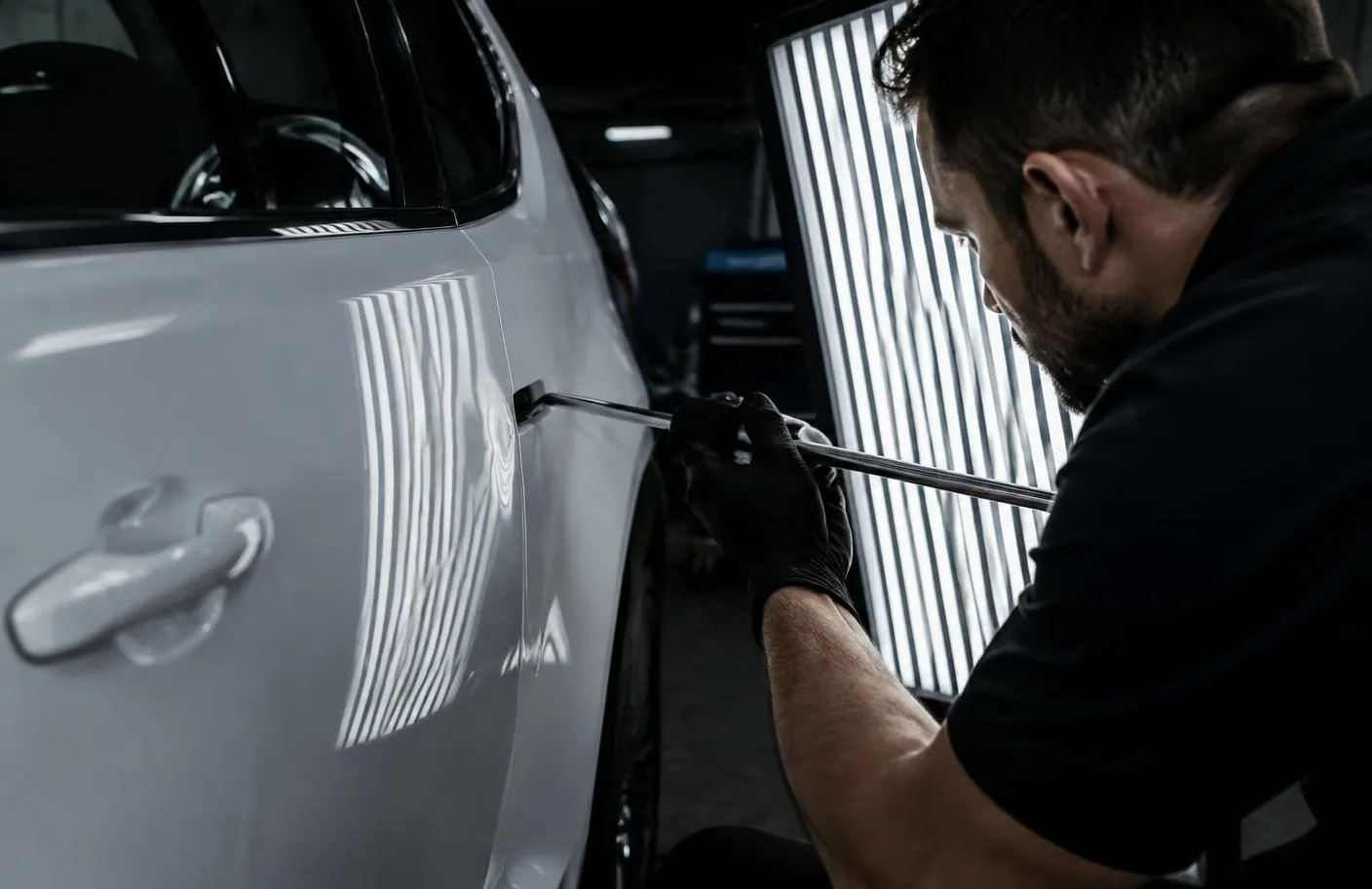
PDR is a way of repairing dents by reshaping the original metal instead of filling and repainting it. When it works, the factory paint stays on the car. If you have a ding, a crease or hail damage and want to know whether it qualifies, this guide explains how PDR works, and our page on dent repair in Salt Lake City covers how we assess your vehicle.
What PDR means
PDR is short for a dent repair method where no paint is applied. Instead of sanding the panel, adding filler and refinishing it, the technician gently pushes and works the dented metal back toward its original shape. Because the paint is never removed, there is nothing to color match, no primer, and no paint to cure.
How the repair works
A typical PDR repair follows the same basic steps:
- Assess the dent. The technician looks at depth, size, location, the body line, and whether the paint is intact.
- Get access behind the panel. That might mean going through an existing opening, removing a trim piece or an interior panel, or working around bracing.
- Read the dent with light. A reflective light board or line light shows the high and low spots in the panel, which are hard to see with the naked eye.
- Work the metal slowly. Specialized rods and tools apply small, controlled pushes from behind. High spots around the dent are tapped down so the panel levels out rather than just bulging back.
- Check the finish. The panel is checked again under the light from several angles until the surface reads smooth.
Some dents are worked from the front using glue tabs and pulling tools when there is no good access from behind.
What damage qualifies
PDR tends to work well on:
- Door dings from parking lots and car doors
- Small and medium shallow dents on doors, fenders, quarter panels, hoods and roofs
- Many hail dents, where the paint is not cracked
- Some soft creases, depending on how sharp and long they are
The common thread is that the paint is unbroken and the metal has not been stretched too far.
When PDR is not the right repair
PDR is not a fix for every dent. It usually is not suitable when:
- The paint is cracked, chipped or scraped through
- The metal is sharply creased or stretched
- The dent is on a panel edge or structural area that cannot be reshaped cleanly
- There is no practical way to reach the back of the dent
- The panel has old filler or previous repairs underneath
In those cases, conventional body repair and refinishing is the better path. We explain why before any work starts. If you were in a minor accident, our 4 tips for dents after a minor accident help you sort out which kind of damage you have.
Hail damage and PDR
Hail can leave dozens or hundreds of small dents across the hood, roof and trunk lid. When the paint is intact, PDR is often a good fit for hail damage because each dent can be worked out without refinishing whole panels. Larger or sharper hail dents, or dents on the roof rails and panel edges, may need a mix of PDR and conventional repair.
Door dings
Door dings are some of the most common dents we see. They are usually small and shallow, and they often sit in places that can be reached from inside the door. That makes them a good candidate for PDR. A ding right on a sharp body line or at the edge of a door can be harder and is worth having looked at in person.
Why keep the factory paint?
Original paint is generally the best paint your car will ever have. Keeping it avoids color-match concerns on that panel and avoids the sanding and refinishing work body repair involves. That is why we check whether a dent can be repaired without repainting before recommending other options.
Ask the JNG team
Photos help, but the light board tells the real story. Call JNG Auto Reconditioning at (385) 346-8803 or send photos for a dent repair quote and we will tell you whether PDR or body work makes sense for your car.